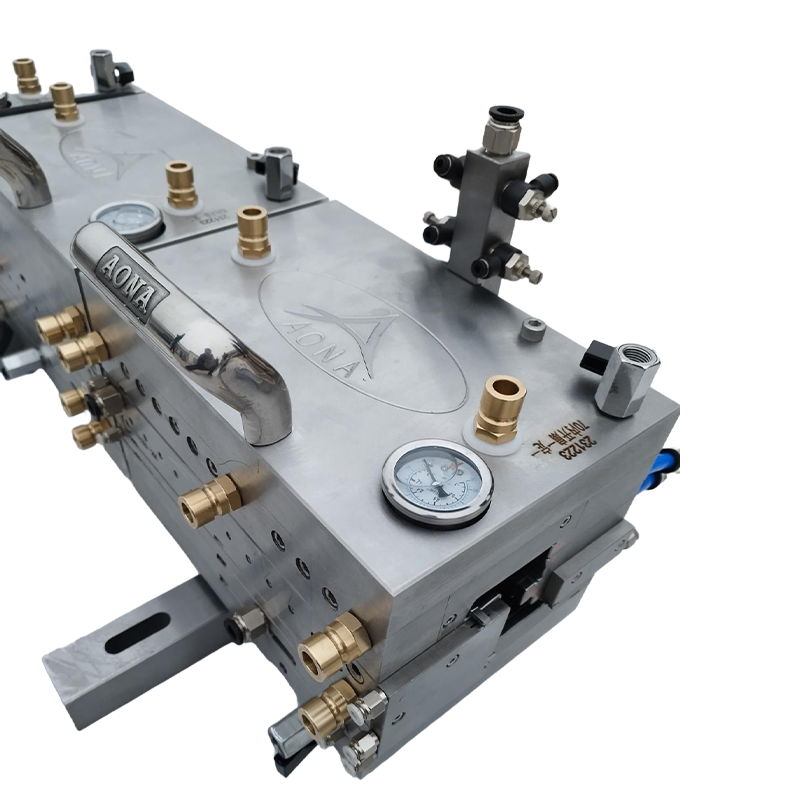
Why do profiles become brittle? I will show you in this article.
For quite some time, the brittleness of plastic profiles has been a persistent issue hindering the normal operations of various profile manufacturing enterprises. Whether judged by the visual appearance of the cross-section or the level of acceptance among door and window assembly plants, profile brittleness invariably—and to varying degrees—negatively impacts these companies’ market share and corporate reputation. Fundamentally, profile brittleness is fully manifested in the compromised physical and mechanical properties of the finished products. Its primary symptoms include chipping or splintering during the cutting process, and cracking under cold punching. There are numerous factors contributing to the poor physical and mechanical performance of profile products; these causes are predominantly categorized into the following types:
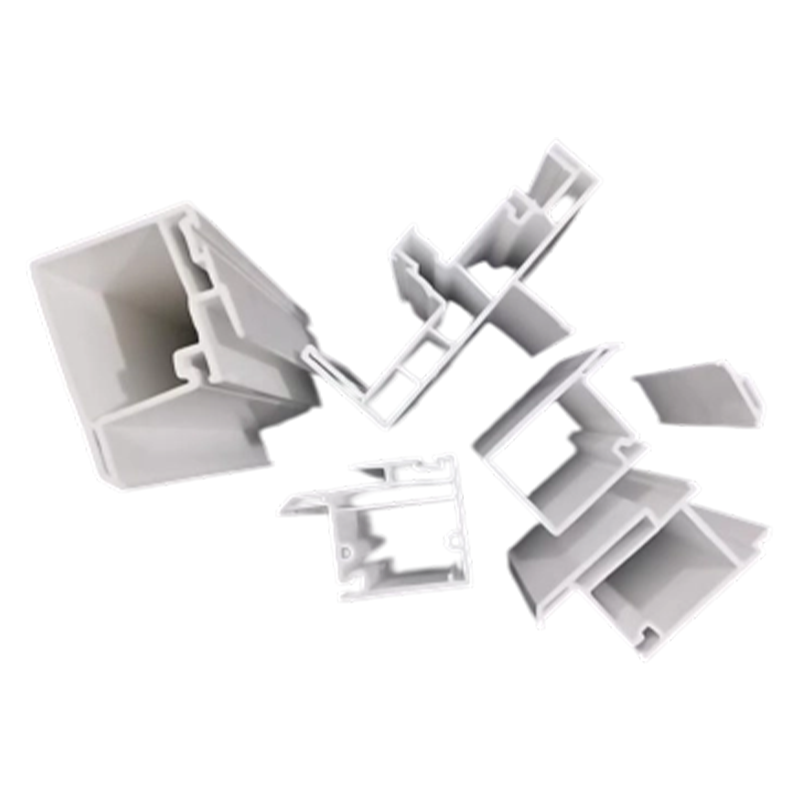
Mold design is unreasonable
(1) The cross-sectional design of the die is unreasonable, particularly regarding the distribution of internal ribs and the treatment of angles at interfaces. This leads to stress concentration; therefore, the design must be improved to eliminate right angles and acute angles at these interfaces.
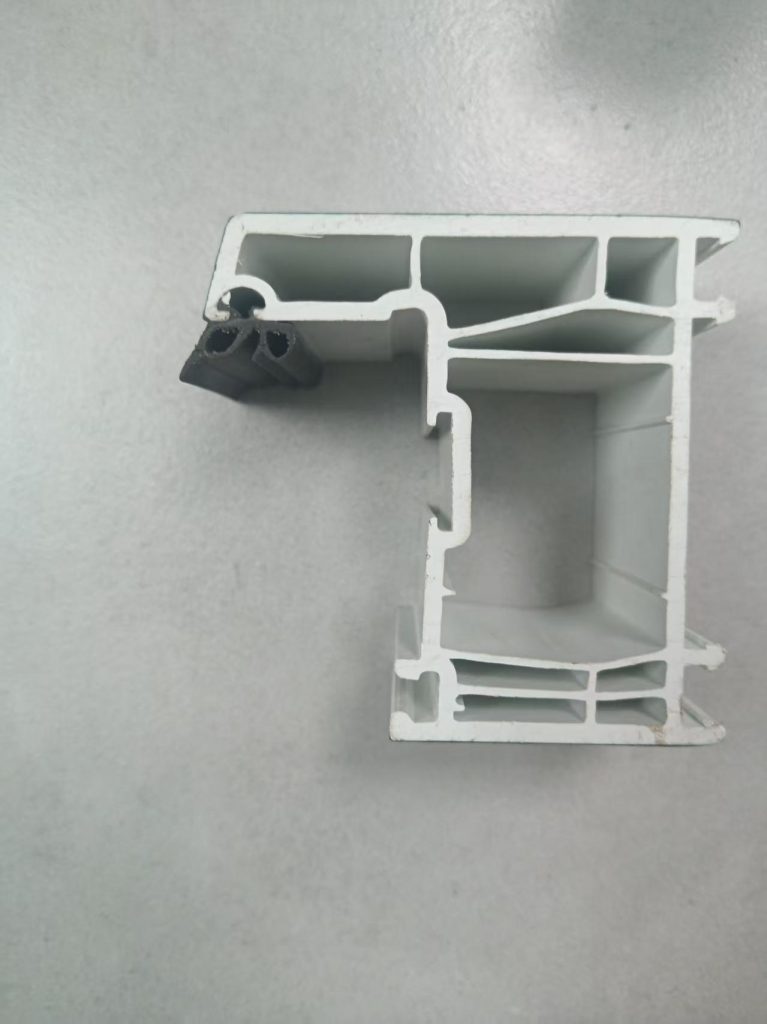
(2) Insufficient die pressure. The pressure at the die is directly determined by the die’s compression ratio—specifically, the length of the die’s parallel land section. An excessively low compression ratio or a parallel land section that is too short results in a lack of product density, thereby compromising physical properties. Die pressure can be adjusted in several ways: by altering the length of the parallel land section to modify flow resistance; by selecting a different compression ratio during the design phase (ensuring compatibility with the extruder screw’s compression ratio); or by modifying the formulation, adjusting extrusion process parameters, or adding a breaker plate to change the melt pressure.
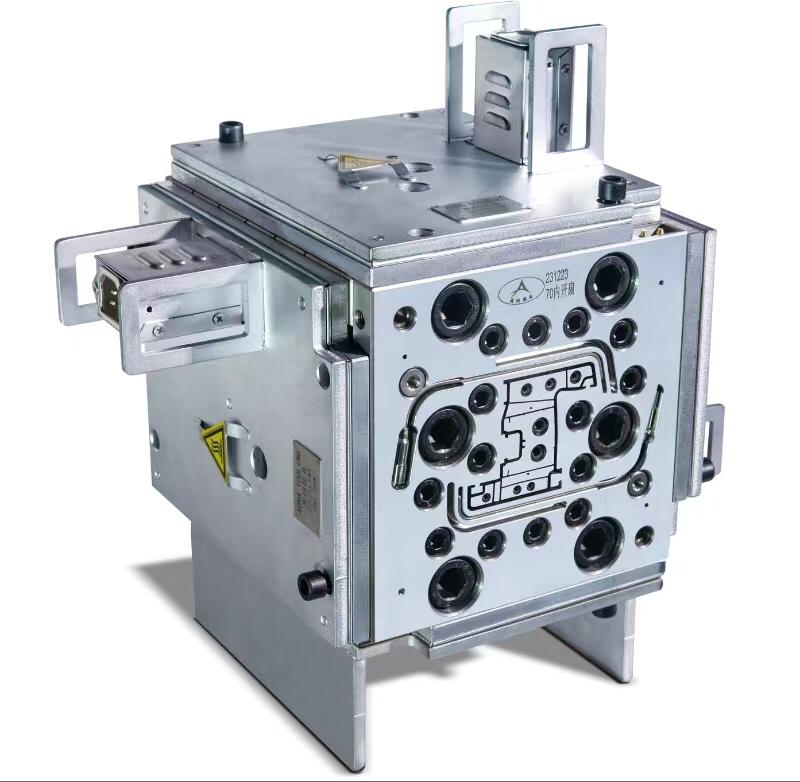
(3) To address performance degradation caused by poor convergence of flow streams, the length of the flow paths—specifically between the ribs and the outer surface or at the junctions where ribs converge—should be appropriately increased, or the compression ratio should be raised.
(4) Uneven material discharge from the die results in inconsistent wall thickness or density across the profile. This leads to a disparity in mechanical properties between the two sides of the profile; the fact that cold-punching tests sometimes yield passing results on one side but failing ones on the other serves as direct evidence of this. Non-standard profiles—such as those with thin walls—will not be discussed further here.
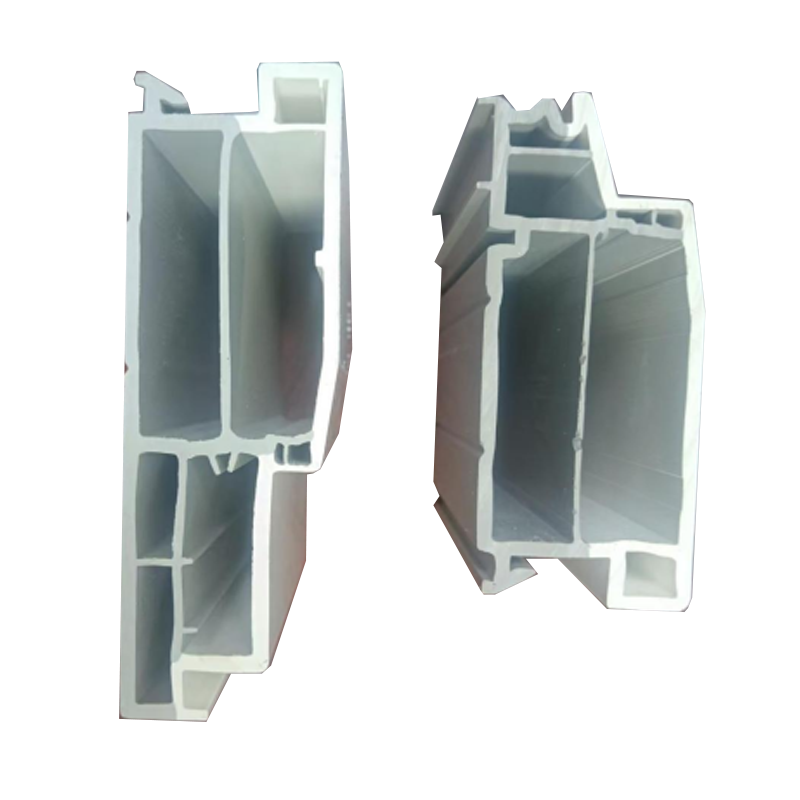
(5) Cooling rate of the calibration mold. The temperature of the cooling water often does not receive sufficient attention; however, the function of the cooling water is to rapidly cool and set the stretched macromolecular chains of the profile to meet performance requirements. Slow cooling allows the molecular chains sufficient time to relax, which aids in the setting process. Conversely, rapid cooling—where the temperature difference between the water and the extruded parison is excessive—subjects the product to thermal shock, which is detrimental to its low-temperature performance.
From the perspective of polymer physics, PVC macromolecular chains undergo coiling and stretching under the influence of temperature and external forces; when these factors are removed, the chains fail to promptly return to a free state and instead become “frozen” in a disordered, glassy arrangement, resulting in poor low-temperature impact strength at the macroscopic level. From the perspective of plastics processing technology, PVC profiles undergo a stress relaxation process after extrusion and the subsequent removal of heat and external forces.
An appropriate cooling water temperature facilitates this process. If the water temperature is too low, internal stresses in the product cannot be adequately relieved, leading to degraded performance. Therefore, a gradual cooling method is employed for profiles; this prevents post-molding issues such as warping, bending, and shrinkage, and avoids a reduction in impact strength caused by internal stresses. Typically, the water temperature is maintained at 20°C. To ensure the profile cools gently rather than undergoing rapid quenching, the cooling water inlet is connected to the rear of the sizing sleeve; the water flows through the sleeve in the direction opposite to the profile’s movement and exits at the front. This arrangement prevents the profile from being suddenly chilled by excessively cold water, which would otherwise generate excessive internal stress, cause embrittlement, and reduce impact resistance.