
(I) Wood-Grain Profiles
Compared with white profiles, wood-grain profiles only differ in the formulation: in the usual white profile formulation, remove titanium dioxide,ultramarine blue, fluorescent whitening agents, etc., and add colored pigments or ultraviolet absorbers. The extrusion process is basically unchanged. There are also two processing methods for wood-grain profiles: one is the color paste method, and the other is the color masterbatch method.
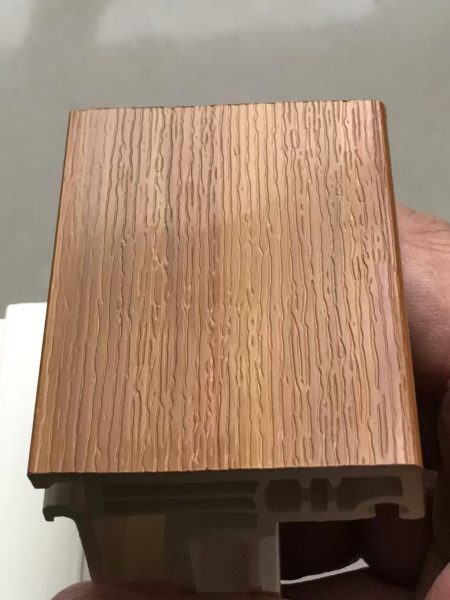
- Color Paste Method: In this method, color paste is added through a liquid metering pump at the vacuum exhaust port of the extruder during the normal extrusion of the profile. The color depth of the profile can be controlled by adjusting the slurry flow rate of the metering pump, which is relatively flexible and easy to adjust, with relatively uniform color. However, the disadvantages are: ① The color paste is prone to precipitation and block the flow pipe, making it difficult to control during production; ② The color paste is added at the exhaust port, causing the main machine to be unable to open the vacuum, resulting in internal ribs foaming, and the dimensional change rate after heating failing to meet the standard. In severe cases, it will affect the cold impact and welding strength; ③ Moreover, the color paste contains many organic components, which will cause great damage to the weather resistance of the profile, resulting in color migration and fading.
- Color Masterbatch Method: This method is based on the color and concentration requirements of the profile, adding the color masterbatch in a certain proportion to the premixed powder (or pellets). Using the characteristics of uneven dispersion and unsynchronized plasticization of the masterbatch, wood grain is formed on the profile surface during profile extrusion. The color masterbatch method generally uses two color masterbatches: one is the base color of the profile, and the other forms a slightly darker wood grain on the base color. They are added in proportion during production.
When producing wood-grain profiles with color masterbatch, note the following two points:
① If the process temperature is set too high, the wood grain will be fine and dense; if set too low, the wood grain will be thick and loose.
② The ideal wood grain effect can be achieved by increasing or decreasing the aperture of the porous plate. Without a porous plate, the wood grain lines are thicker than with a porous plate. Large-aperture porous plates have a more obvious wood grain effect than small-aperture ones.
(II) Single-Color Solid Profiles
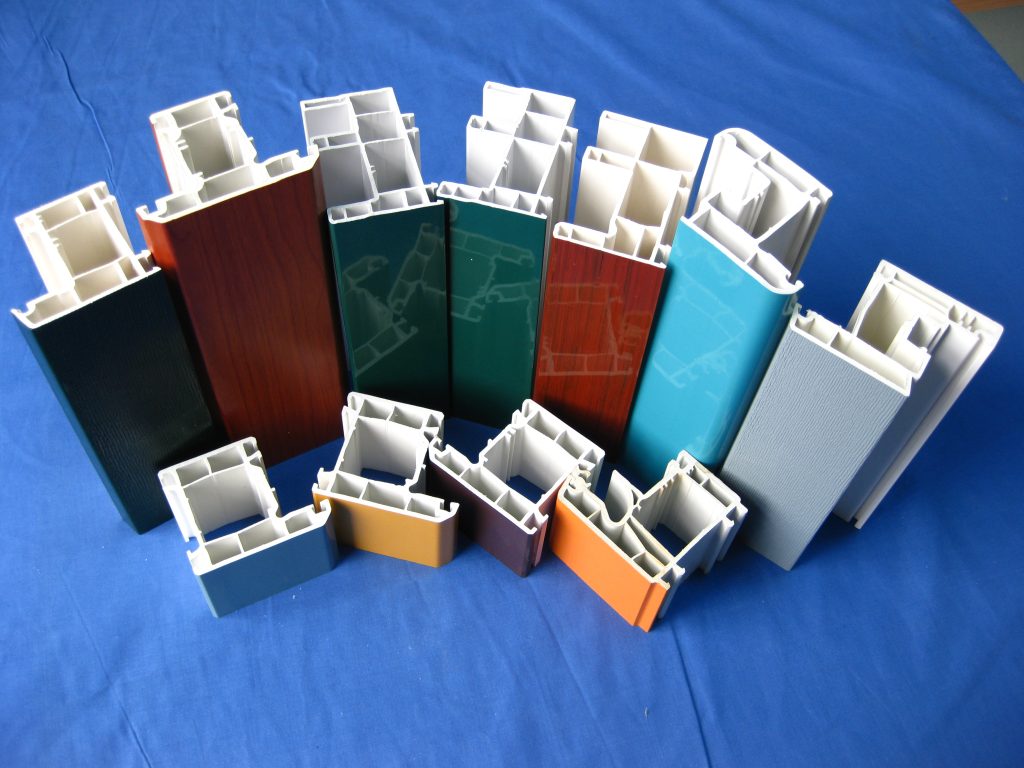
At present, the main colors of single-color solid profiles on the market are dark green, light gray, dark gray, black, bronze, champagne, etc. There are no pure red or pure yellow colors. Too red or too yellow colors are restricted in many cities in the construction industry because they are a kind of light pollution. In particular, red is easy to disturb people’s visual nerves, making people feel impetuous and uneasy. Another reason is that ordinary red and yellow pigments have poor weather resistance (easy to fade) without special treatment. In addition, other colors give people a sense of maturity, stability, health, and environmental protection.
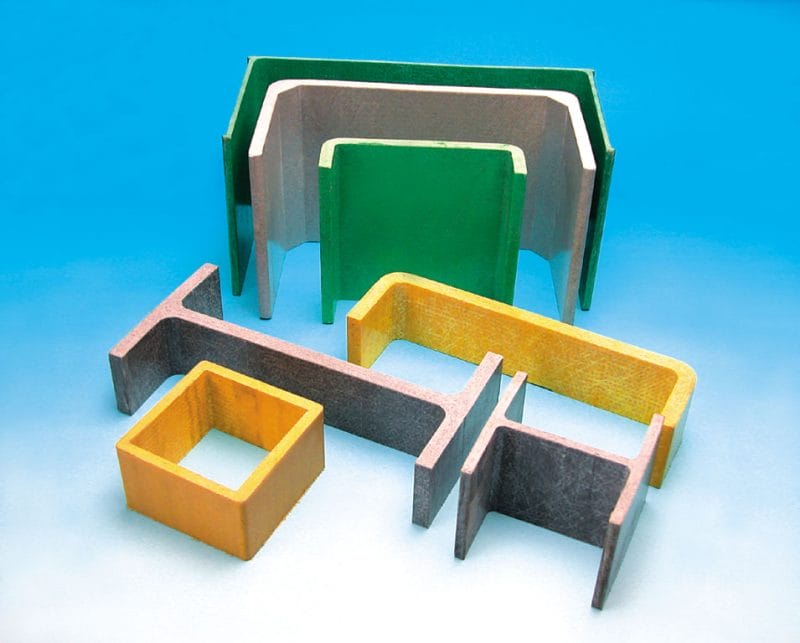
Processing Technology of Single-Color Solid-Colored Profiles
① The processing method of single-color solid profiles is basically the same as the color masterbatch method for wood-grain profiles, except that the color masterbatch used for single-color solid profiles needs to be ground to achieve good dispersion. (Wood grain uses the characteristic of poor dispersion of color masterbatch; if color masterbatch is directly used without grinding, irregular continuous deep and shallow lines will appear on the profile surface.)
② Why does the color masterbatch need to be pelletized and then ground? Why not directly mix the color powder with the raw materials? This is also the reason why some profile enterprises have been unable to grasp the characteristics and laws of solid-colored profiles, resulting in inconsistent profile color shades and unstable batches.
Because the color powder used for compounding color masterbatch is composed of several raw materials and several colors, the particles of these colors are relatively fine. If directly combined, they are easy to form particles again during mixing. The pelletization process and the addition to the PVC base material will make the color material undergo high-temperature shearing and mixing to achieve basic uniformity. Moreover, the ground particles after pelletization are far larger than the color itself and have plasticity, so they will not re-agglomerate into large particles to achieve good dispersion. In addition, flying dust is reduced during mixing, which will not cause cross-contamination on the production site. Because many enterprises still mainly produce white profiles, if the dust during mixing is serious, it will affect the subsequent production of white profiles.
③ The processing temperature requirements for single-color solid-colored profiles are relatively strict. If the temperature is too high or too low, color difference will occur on the profile. Therefore, it is necessary to strengthen the control of the processing technology, with regular and fixed skilled operators for production.
④ Single-color solid-colored profiles have higher requirements for mold finish. Because slight shrinkage marks, bright bands, and light-transmitting bands are not obvious on white profiles, but they are very serious on the surface of colored profiles, especially obvious on dark colors (except black profiles).
⑤ In the formulation system of single-color solid-colored profiles, on the premise of not affecting the physical indicators of the profile, appropriately increase the amount of lubricant to achieve surface gloss.
⑥ Single-color solid-colored profiles should avoid scratches during packaging, transportation, and door and window production. Because slight scratches will make the scratched part of the profile appear white due to the different colors from the original part.
Development Prospects
At present, most of the plastic special-shaped profile market is dominated by white profiles, and the irregular competition of non-standard profiles has caused market chaos in the profile industry. The operation of profile factories is also difficult, and most large-scale profile factories are looking for a way out. The colorization of profiles is a development trend, especially in coastal cities such as Qingdao, Shanghai, Xiamen, and Shenzhen, which have taken the lead in adopting colored plastic special-shaped profiles in building doors and windows. This is of course affected by aluminum alloy profiles. In the past few years, aluminum alloys have occupied a dominant position in the door and window industry. Most aluminum alloys for doors and windows adopt electrophoretic coating, powder spraying, fluorocarbon spraying and other processes to achieve colorization, the so-called “color aluminum”. In 2000, the state introduced policies to gradually restrict the production of aluminum alloy profiles for doors and windows from the perspective of environmental protection and energy conservation. Therefore, in the process of transitioning from aluminum alloy doors and windows to plastic steel doors and windows, colored plastic profiles were born, promoting its development. According to market analysis, colored plastic special-shaped profiles will occupy a dominant position in the door and window market in the next 3-5 years.
The suitable objects for the production of colored plastic special-shaped profiles are medium and small-scale profile factories. Because each person and each project has different color requirements, resulting in the characteristics of low usage of each color of colored profiles, ranging from tens of tons to hundreds of tons. Therefore, processing large-scale profiles is relatively cumbersome, while small and medium-sized enterprises operate relatively flexibly. Therefore, the production of colored profiles by small and medium-sized enterprises is indeed a way out.
Restrictive Factors
All colored products, whether produced with organic pigments or inorganic raw materials, will more or less have color migration and fading phenomena. If the color masterbatch has poor weather resistance in addition to the formulation itself, it will also affect the weathering aging degree of the profile. This requires the profile production factory to choose regular color masterbatch suppliers, strengthen the control of the company’s own formulation, and the samples must be put into production after passing the weather resistance test by a professional door and window testing department. Waste materials of colored special-shaped profiles produced by lamination, co-extrusion, and spraying are difficult to recycle, but solid-colored special-shaped profiles do not have this problem.
With the continuous development of science and technology, we believe that colored plastic special-shaped profiles will have great development space and embark on a healthy and environmentally friendly development path, adding color to people’s home life.
Would you like me to also format this translation into a more formal academic paper style, or make a concise summary of the key technical points?