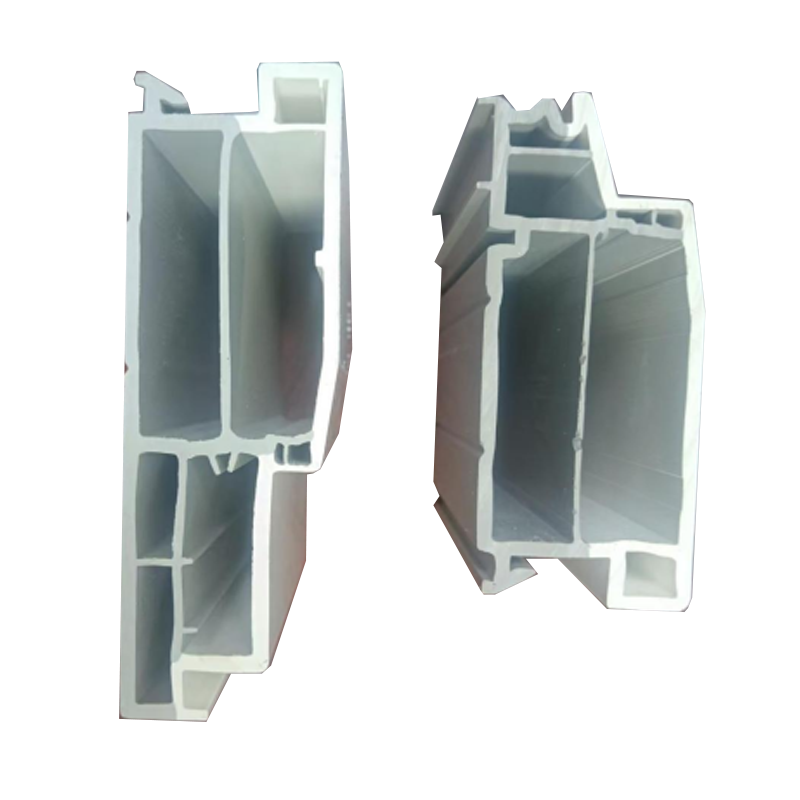
Why do profiles become brittle? I will show you in this article.
For quite some time, the brittleness of plastic profiles has been a persistent issue hindering the normal operations of various profile manufacturing enterprises. Whether judged by the visual appearance of the cross-section or the level of acceptance among door and window assembly plants, profile brittleness invariably—and to varying degrees—negatively impacts these companies’ market share and corporate reputation. Fundamentally, profile brittleness is fully manifested in the compromised physical and mechanical properties of the finished products. Its primary symptoms include chipping or splintering during the cutting process, and cracking under cold punching. There are numerous factors contributing to the poor physical and mechanical performance of profile products; these causes are predominantly categorized into the following types:
Today we will talk about : Unreasonable Formulation and Mixing Processes
(1) Excessive Filler Content. Given the current market landscape—characterized by low profile prices and rising raw material costs—profile manufacturers are all focusing their efforts on cost reduction. Reputable manufacturers achieve this by optimizing their formulations to lower costs without compromising product quality; however, some manufacturers reduce costs at the expense of product quality. Due to the nature of formulation components, the most direct and effective method for cost-cutting is to increase the use of fillers—specifically calcium carbonate, which is the most common filler in PVC-U plastic profiles. In earlier formulation systems, “heavy” calcium carbonate was predominantly used to enhance rigidity and reduce costs. However, due to its irregular particle shape, relatively coarse particle size, and poor compatibility with the PVC resin matrix, its permissible addition level was quite low; moreover, increasing its proportion would negatively impact the profile’s color and surface appearance. With advancements in technology, most manufacturers now utilize ultrafine lightweight activated calcium carbonate—or even nano-scale calcium carbonate. These materials not only serve to increase rigidity and provide bulk filling but also function as modifiers. Nevertheless, the quantity added is not without limits; the proportion must be carefully controlled. Currently, some manufacturers—in their pursuit of cost reduction—are adding calcium carbonate in quantities ranging from 20 to 50 parts by weight. This practice significantly degrades the physical and mechanical properties of the profiles, resulting in the “brittleness” phenomenon discussed in this chapter.
(2) Type and Quantity of Impact Modifiers. An impact modifier is a polymer capable of increasing the total energy required to fracture polyvinyl chloride (PVC) when subjected to stress. Currently, the primary types of impact modifiers used for rigid PVC include CPE, ACR, MBS, ABS, and EVA. Among these, CPE, EVA, and ACR modifiers—whose molecular structures contain no double bonds—exhibit excellent weather resistance, making them suitable for use in outdoor construction materials. When blended with PVC, these modifiers effectively enhance the rigid PVC’s impact strength, processability, and weather resistance, while also improving weld-corner strength within a certain range.
In a PVC/CPE blend system, the impact strength increases as the CPE content rises, following an S-shaped curve. When the addition level is below 8 parts by weight, the increase in the system’s impact strength is very slight; the rate of increase is greatest when the addition level falls between 8 and 15 parts by weight; thereafter, the rate of increase tends to level off. When the CPE content is below 8 parts by weight, it is insufficient to form a network structure. When the CPE content is between 8 and 15 parts by weight, it disperses continuously and uniformly throughout the blend system, forming a phase-separated yet non-dissociating network structure; this configuration results in the maximum increase in the blend system’s impact strength. However, when the CPE content exceeds 15 parts by weight, continuous and uniform dispersion is no longer achieved; instead, a portion of the CPE forms a gel-like phase. Consequently, there are insufficient dispersed CPE particles at the two-phase interface to absorb impact energy, causing the growth in impact strength to slow down.In PVC/ACR blend systems, ACR can significantly enhance the impact resistance of the blend. Furthermore, the “core-shell” ACR particles disperse uniformly within the PVC matrix; with PVC serving as the continuous phase and ACR as the dispersed phase, the latter interacts with the PVC within the continuous medium. This interaction functions as a processing aid, facilitating the plasticization and gelation of the PVC, resulting in shorter plasticization times and excellent processing characteristics. The molding temperature and plasticization time have only a minor influence on the notched impact strength, and the reduction in flexural modulus is also minimal. Typically utilized at a dosage of 5–7 parts by weight, rigid PVC products modified with ACR exhibit excellent impact strength at both room temperature and low temperatures.
Experimental evidence has further demonstrated that, compared to CPE, ACR yields an impact strength that is approximately 30% higher. Consequently, the PVC/ACR blend system should be prioritized in formulations whenever feasible; conversely, when CPE is used as a modifier—particularly at dosages below 8 parts by weight—it frequently leads to brittleness in the resulting profiles.
(3) Excessive or Insufficient Stabilizer. The function of a stabilizer is to inhibit degradation, react with released hydrogen chloride, and prevent discoloration during the processing of polyvinyl chloride (PVC). The optimal dosage of a stabilizer varies depending on its specific type; however, as a general rule, using an excessive amount delays the material’s plasticization time. Consequently, the material remains under-plasticized upon exiting the die, meaning that the various molecules within the formulation system have not fully fused together, resulting in a weak intermolecular structure. Conversely, using an insufficient amount causes the relatively low-molecular-weight components within the formulation system to degrade or decompose (a phenomenon sometimes referred to as “over-plasticization”), thereby compromising the structural integrity of the intermolecular bonds among the various components. Therefore, the quantity of stabilizer used directly impacts the impact strength of the profile; whether the dosage is excessive or insufficient, it will lead to a reduction in the profile’s strength and result in brittleness.
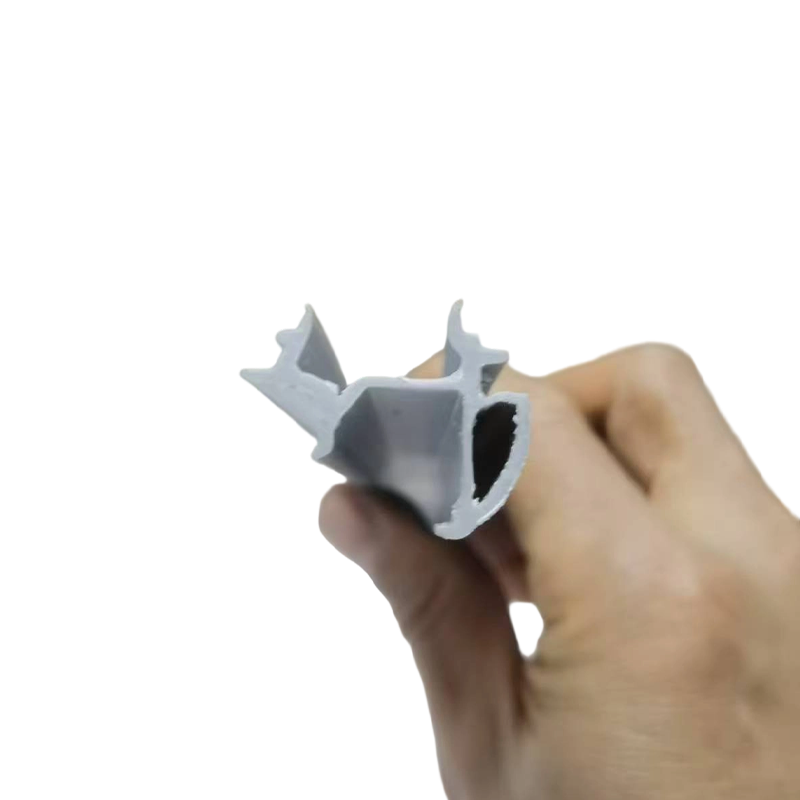
(4) Excessive Use of External Lubricants. External lubricants exhibit low compatibility with the resin; they facilitate sliding between resin particles, thereby reducing frictional heat and delaying the melting process. This lubricating effect is most pronounced during the early stages of processing—specifically, before the combined influence of external heating and internally generated frictional heat causes the resin to fully melt and the individual resin particles within the melt to lose their distinct identities. External lubricants are further categorized into “early-stage” and “late-stage” types. Materials that are “over-lubricated” typically exhibit poor appearance under various processing conditions. If the dosage of the lubricant is inappropriate, it may lead to defects such as flow marks, reduced output, cloudiness, poor impact strength, surface roughness, adhesion, and inadequate plasticization. In particular, the use of excessive amounts results in poor compaction and inadequate plasticization of the profile, which in turn compromises impact performance and renders the profile brittle.
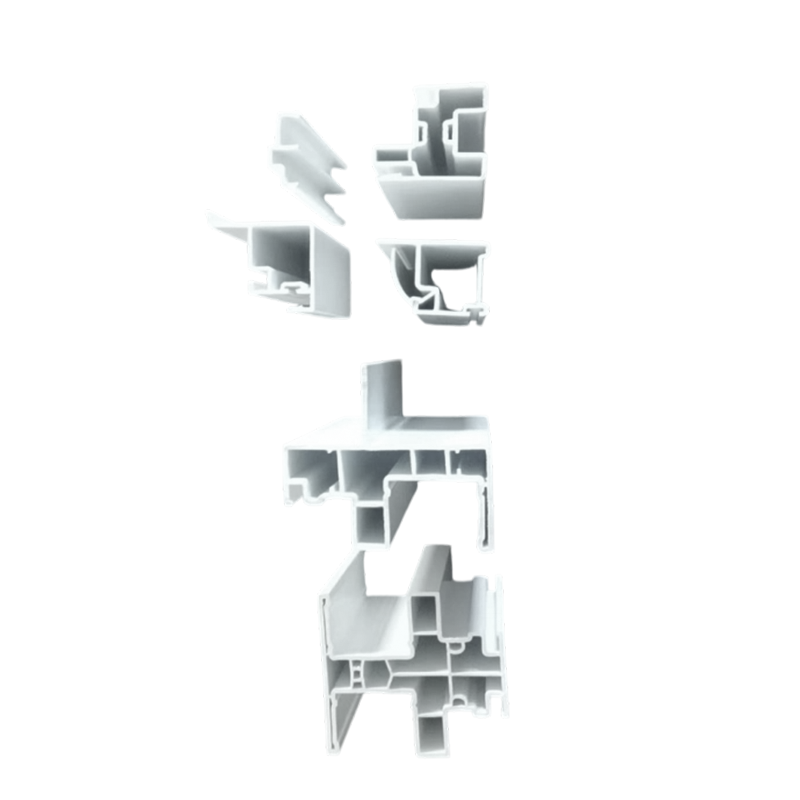
(5) The feeding sequence during hot mixing, temperature setpoints, and maturation time are also decisive factors influencing the performance of profiles. PVC-U formulations comprise numerous components; therefore, the selected feeding sequence should be designed to facilitate the optimal functioning of each additive and accelerate dispersion, while simultaneously avoiding adverse synergistic effects. Specifically, the additive feeding sequence should enhance the complementary interactions among additives—thereby counteracting any mutually inhibitory or neutralizing effects—and ensure that additives intended for dispersion within the PVC resin fully penetrate the resin matrix.
A typical feeding sequence for a lead-salt stabilization system formulation is as follows:
a. With the mixer operating at low speed, add the PVC resin into the hot mixing vessel.
b. At 60°C, switch to high-speed operation and add the stabilizers and metallic soaps.
c. At approximately 80°C, under high-speed operation, add the internal lubricants, pigments, impact modifiers, and processing aids.
d. At approximately 100°C, under high-speed operation, add waxes and other external lubricants.
e. At 110°C, under high-speed operation, add the fillers.
f. Between 110°C and 120°C, switch to low-speed operation and discharge the material into the cold mixing vessel for cooling.
g. Continue cold mixing until the material temperature drops to approximately 40°C; then, discharge the material and pass it through a sieve.
The aforementioned sequence of additive introduction is generally considered reasonable; however, in actual production practice, the specific procedure often varies depending on a manufacturer’s specific equipment and operating conditions. Most manufacturers, for instance—with the exception of the resin—tend to introduce all other auxiliary additives simultaneously. In other cases, lightweight activated calcium carbonate may be added concurrently with the primary raw materials. Consequently, it is incumbent upon a company’s technical personnel to formulate a processing methodology and material feeding sequence that is specifically tailored to the unique characteristics of their own enterprise.
Typically, the hot-mixing temperature is maintained at approximately 120°C. If the temperature falls below this threshold, the material will fail to achieve proper gelation or uniform dispersion; conversely, if the temperature exceeds this level, certain components of the material may undergo thermal decomposition or volatilization, potentially resulting in the discoloration (yellowing) of the dry-mixed powder.
The mixing duration typically ranges from 7 to 10 minutes to ensure the material achieves the requisite density, homogeneity, and partial gelation. The subsequent cold-mixing phase is generally conducted at temperatures below 40°C and requires a rapid cooling rate. If the temperature remains above 40°C while the cooling rate is sluggish, the resulting dry-mixed compound will exhibit a lower density compared to standard preparations. The curing period for the dry-mixed compound is typically set at 24 hours; if this duration is exceeded, the material becomes susceptible to moisture absorption or agglomeration (clumping); conversely, if the curing time is insufficient, the intermolecular structure of the material remains unstable, leading to significant fluctuations in the dimensional accuracy and wall thickness of the extruded profiles. Failure to exercise rigorous control over any of the aforementioned stages will inevitably compromise the quality of the final profile products; in specific instances, this may manifest as increased brittleness in the extruded profiles.