
HDPE Extrusion Tooling
HDPE (density 0.95, Chinese grade 5502) features high rigidity and is suitable for HDPE extrusion tooling. It supports two custom die configurations, one for profile extruders and one for pipe extruders, ensuring stable molding, dimensional accuracy, and smooth mass production. AONA provides professional technical support for 27 years.
HDPE Extrusion Tooling Raw Material and Die Configuration Instructions
1. HDPE raw material has a density of 0.95 and excellent rigidity, making it a commonly used raw material in the profile extrusion field. Domestic 5502 grade HDPE possesses good melt strength and molding performance, making it suitable for extrusion processing. Depending on the customer’s existing equipment, two completely different HDPE Extrusion Tooling solutions can be used, one for profile extruders and one for pipe extruders.
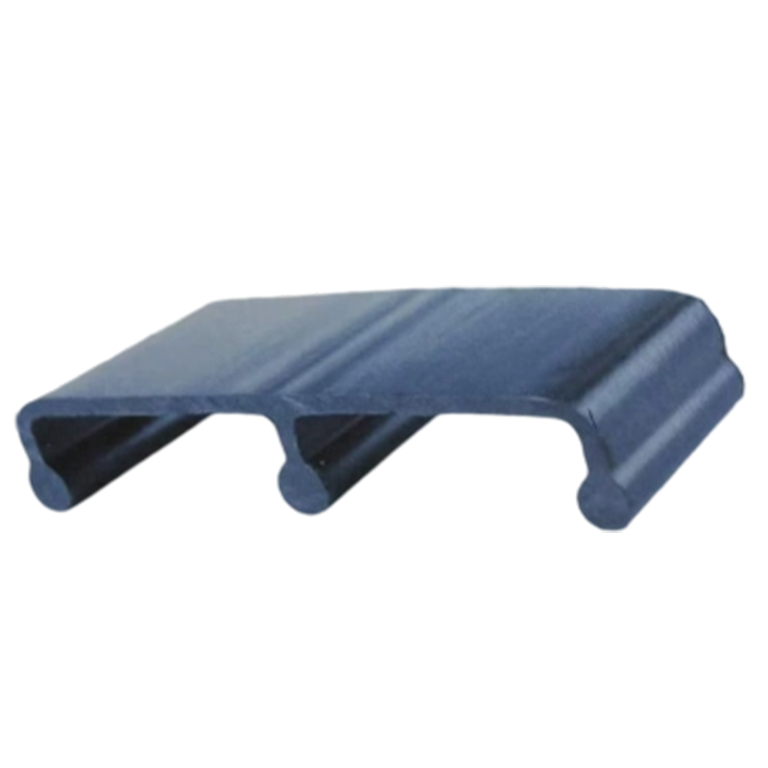
2. When customers use profile extruders to produce HDPE products, the complete HDPE Extrusion Tooling system uses a standard profile die configuration. The complete configuration includes an extruder head, three 150mm shaping plates, and a 2-meter cooling water tank. This compact assembly has a clear division of labor between vacuum shaping and cooling, enabling stable shaping and cooling of HDPE profiles, effectively controlling product dimensional tolerances, ensuring profile straightness and surface quality, suitable for continuous mass production of standard HDPE profiles, simple debugging, and convenient maintenance.
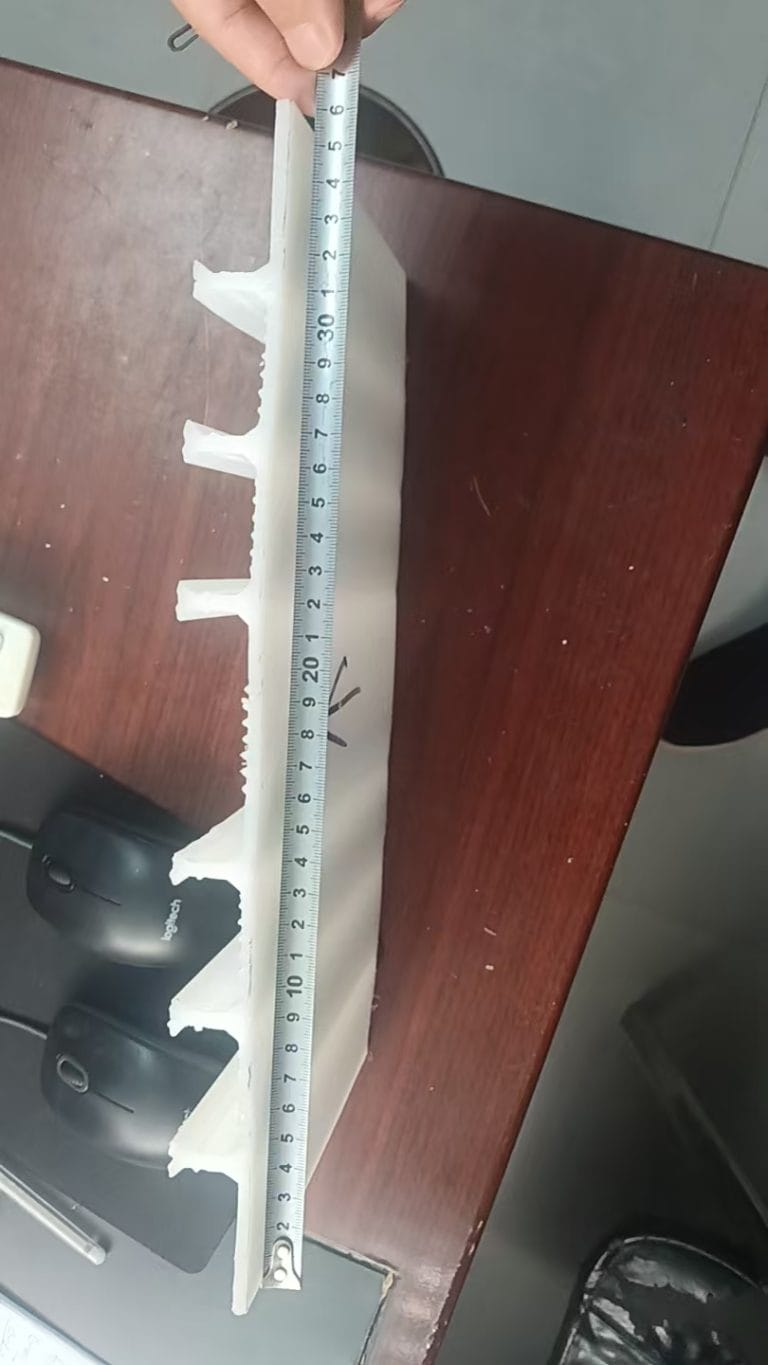
3. If the customer only has a pipe extruder on site, no parts of the extruder need to be modified, and the modular shaping structure shown in the photo can be used. This solution assembles multiple shaping plates, with an overall combined length of 1.2 meters, all placed inside a vacuum chamber, where the vacuum chamber facilitates unified adsorption and shaping. Utilizing the extended modular shaping plates, it fully matches the extrusion conditions of the pipe extruder, compensating for the shaping limitations caused by differences between pipe and profile extruders, ensuring rapid shaping of the rigid HDPE melt, and avoiding problems such as profile warping, deformation, and dimensional misalignment.
4. Both solutions are designed for the high rigidity and demanding cooling and shaping requirements of HDPE material. When using domestic 5502 grade HDPE, it offers good melt flowability and rigidity balance, and has high compatibility with the two HDPE Extrusion Tooling configurations mentioned above. During selection, it is necessary to first confirm the customer’s existing extruder model, distinguishing between profile and pipe extruders, to select the corresponding mold shaping structure, reducing on-site debugging difficulty and achieving stable production.
Our company has been conducting in-depth research on HDPE Extrusion Tooling since 2006. If you encounter any problems in production, please feel free to contact AONA EXTRUSION TOOLING. Our engineers, with 27 years of experience, will do their best to help you solve them.
Recommendation
